Posts

Showing posts with the label protagonism

Finding the fun: reward cycles

Since the Forge has lost some currency in popular RPG discourse, we don’t much talk about its theoretical fruits. In the following blog post, I’ll recover the Forgie notion of "reward cycle", with copious examples, mostly from actual play, disambiguating it from other concepts and showing how it sometimes works in play or goes astray. In the Forgie concept of games, a game is an instrument that a skilled play group uses to focus its play. We play games, not the other way around. I've written this blog post  to show how a skilled play group relates to a good game. I'm not writing for designers, though I do offer some tips for design, but for anybody interested in the phenomenology of play. Collective affective response and skilled play Group RPGs are social games. When I play well, I get a collective affective response. When things are going well, creatively, I can literally see it on the face of everyone playing. We’re all leaning in. (Note that “things going well, cr...

Recent games AP reports

Image
It Was a Mutual Decision (2002) Photo of It Was a Mutual Decision, stolen from the internet Played with Misha, Divya, and Ken. Misha and I are a real-life couple, and Ken and Divya are a real-life couple. Misha and Divya are women, Ken is a man, and I am nonbinary, though I played on Ken's team in the game. All three, and everyone else I have talked to, were absolutely charmed by the premise of the game. It is an extremely easy sell. The rulebook promises that the rat content will serve to soften the blow of the breakup content, and this is certainly what I observed in play. We would go from shouting and breathing hard as we hurled in-character invectives across the room, to giggling uncontrollably while figuring out how to add rats to the scene. Authorities in play were natural and easy. Ken and I, and Misha and Divya, handed of narration without a word and without conflict. Everyone was creatively focused. We did not put much work into establishing the social landscape around our...

Body, injury, size, monsters, benchmarking

Image
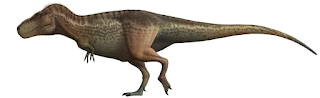
Famously, your ability/competence doesn't decrease as you lose HP. Lots of games have tried to model injuries and death at low/zero HP; here's my shot at it. We'll add a new stat to people and monsters, Injury Points, or IP, scaled to their size. System assumptions HP doesn't represent physical durability or martial fitness directly; it represents protagonism in a genre that privileges those things. Thus as we increase in HP (via leveling) we normally improve our attack bonus, but we also improve our ability to ignore various harms and annoyances. If I've got high HP, it'll take me ages to starve to death, not because I have secret caloric reserves, but because, holy mackerel, when was the last time you read a good pulp fantasy novel where the hero starved to death? Similarly, I'll last for ages in combat, taking many more hits than a normal man, and it's not because I'm more physically durable, but because I am a hero, and heroes don't die in pi...